Senin, 08 Desember 2014

[B482.Ebook] Free Ebook Foundation for Object / Relational Databases: The Third Manifesto, by C. J. Date, Hugh Darwen

Free Ebook Foundation for Object / Relational Databases: The Third Manifesto, by C. J. Date, Hugh Darwen

Reviewing a publication Foundation For Object / Relational Databases: The Third Manifesto, By C. J. Date, Hugh Darwen is sort of very easy activity to do every single time you desire. Even reviewing every time you want, this task will certainly not disturb your various other activities; lots of people frequently review the e-books Foundation For Object / Relational Databases: The Third Manifesto, By C. J. Date, Hugh Darwen when they are having the leisure. Exactly what regarding you? Exactly what do you do when having the downtime? Don't you invest for worthless things? This is why you should get guide Foundation For Object / Relational Databases: The Third Manifesto, By C. J. Date, Hugh Darwen and also attempt to have reading habit. Reading this e-book Foundation For Object / Relational Databases: The Third Manifesto, By C. J. Date, Hugh Darwen will not make you worthless. It will offer more benefits.

Foundation for Object / Relational Databases: The Third Manifesto, by C. J. Date, Hugh Darwen

Foundation for Object / Relational Databases: The Third Manifesto, by C. J. Date, Hugh Darwen


Foundation for Object / Relational Databases: The Third Manifesto, by C. J. Date, Hugh Darwen

Free Ebook Foundation for Object / Relational Databases: The Third Manifesto, by C. J. Date, Hugh Darwen

Foundation For Object / Relational Databases: The Third Manifesto, By C. J. Date, Hugh Darwen. Offer us 5 minutes and we will reveal you the best book to read today. This is it, the Foundation For Object / Relational Databases: The Third Manifesto, By C. J. Date, Hugh Darwen that will be your finest option for much better reading book. Your five times will certainly not spend thrown away by reading this web site. You can take guide as a source making far better principle. Referring guides Foundation For Object / Relational Databases: The Third Manifesto, By C. J. Date, Hugh Darwen that can be located with your requirements is at some point challenging. But below, this is so very easy. You could locate the most effective thing of book Foundation For Object / Relational Databases: The Third Manifesto, By C. J. Date, Hugh Darwen that you can read.

When obtaining this publication Foundation For Object / Relational Databases: The Third Manifesto, By C. J. Date, Hugh Darwen as reference to review, you can get not only motivation however additionally brand-new expertise as well as sessions. It has greater than usual perks to take. What kind of e-book that you read it will work for you? So, why should get this book entitled Foundation For Object / Relational Databases: The Third Manifesto, By C. J. Date, Hugh Darwen in this post? As in link download, you could obtain the publication Foundation For Object / Relational Databases: The Third Manifesto, By C. J. Date, Hugh Darwen by on-line.

When obtaining the publication Foundation For Object / Relational Databases: The Third Manifesto, By C. J. Date, Hugh Darwen by on-line, you can read them any place you are. Yeah, also you remain in the train, bus, waiting checklist, or other places, online publication Foundation For Object / Relational Databases: The Third Manifesto, By C. J. Date, Hugh Darwen could be your buddy. Each time is a great time to check out. It will certainly improve your expertise, enjoyable, enjoyable, session, and also encounter without investing more money. This is why online publication Foundation For Object / Relational Databases: The Third Manifesto, By C. J. Date, Hugh Darwen becomes most desired.

Be the initial that are reviewing this Foundation For Object / Relational Databases: The Third Manifesto, By C. J. Date, Hugh Darwen Based on some factors, reviewing this e-book will certainly supply more advantages. Also you require to read it detailed, page by page, you can complete it whenever and wherever you have time. When much more, this online e-book Foundation For Object / Relational Databases: The Third Manifesto, By C. J. Date, Hugh Darwen will offer you simple of reviewing time and task. It likewise supplies the experience that is economical to reach and also get greatly for far better life.

Foundation for Object / Relational Databases: The Third Manifesto, by C. J. Date, Hugh Darwen

now available! A detailed study of the impact of objects and type theory on the relational model of data, including a comprehensive proposal for type inheritance This is the first attempt to describe what object/relational means. If youre interested in object/relational technology, this is the book to read. - Rick van der Lans Independent consultant, author of Introduction to SQL, and past member of the Dutch committee responsible for developing the International SQL Standard This book is an excellent piece of work. It is very rare in computer science to come across a book that provides such a complete and precise theory that is systematically presented and compared to all of the other work in the area. Even those who find the conclusions controversial will admire this thoroughness. - Rick Cattell ODMG Chair, author of Object Data Management and JDBC Database Access with Java, and co-editor of the Object Database Standard: ODMG 2.0 Foundation for Object/Relational Databases: The Third Manifesto is a proposal for the future direction of data and database management systems (DBMSs). It consists of a precise, formal definition of an abstract model of data, to be considered as a bl

  • Sales Rank: #4523459 in Books
  • Published on: 1998-06-15
  • Original language: English
  • Number of items: 1
  • Dimensions: 9.19" h x 1.02" w x 7.44" l, 2.10 pounds
  • Binding: Paperback
  • 528 pages

Review
"This is the first attempt to describe what object/relational means. If you're interested in object/relational technology, this is the book to read." - Rick van der Lans Independent consultant, author of Introduction to SQL, and past member of the Dutch committee responsible for developing the International SQL Standard "This book is an excellent piece of work. It is very rare in computer science to come across a book that provides such a complete and precise theory that is systematically presented and compared to all of the other work in the area. Even those who find the conclusions controversial will admire this thoroughness." - Rick Cattell ODMG Chair, author of Object Data Management and JDBC Database Access with Java, and co-editor of the Object Database Standard: ODMG 2.0

From the Inside Flap

The Third Manifesto is a detailed proposal for the future direction of data and database management systems (DBMSs). Like Codd's original papers on the relational model, it can be seen as an abstract blueprint for the design of a DBMS and the language interface to such a DBMS. In particular, it lays the foundation for what we believe is the logically correct approach to integrating relational and object technologies--a topic of considerable interest at the present time, given the recent appearance in the marketplace of several "object/relational" DBMS products (sometimes called universal servers). Perhaps we should add immediately that we do not regard the idea of integrating relational and object technologies as "just another fad," soon to be replaced by some other briefly fashionable idea. On the contrary, we think that object/relational systems are in everyone's future--a fact that makes it even more important to get the logical foundation right, of course, while we still have time to do so.

The first version of the Manifesto was published informally in early 1994 (though we had been thinking about the idea of such a document for several years prior to that time), and the first "official" version appeared in 1995. Since then we have presented the material in a variety of forms and forums and discussed it with numerous people--indeed, we continue to do so to this day--and we have refined and expanded the original document many, many times. We would like to stress, however, that those refinements and expansions have always been exactly that; nobody has ever shown us that we were completely on the wrong track, and development of the Manifesto has always proceeded in an evolutionary, not a revolutionary, manner. Now we feel it is time to make the material available in some more permanent form; hence the present book.

One reason we feel the time is ripe for wider dissemination of our ideas is as follows. As already indicated, we see a parallel between the Manifesto and Codd's original papers on the relational model; like those papers of Codd's, the Manifesto offers a foundation for what (we believe) the database systems of the future ought to look like. Also like those papers of Codd's, however, the Manifesto itself is, deliberately, fairly terse and not all that easy to read or understand. Would it not have been nice to have had a book that documented and explained and justified Codd's ideas, back at the beginning of the relational era? Well, here we are at the beginning of "the object/relational era," and--modesty aside--we believe this book can play a role analogous to that of that hypothetical relational book. To that end, we have been careful to include not only the formal specifications of the Manifesto itself (of course), but also a great deal of supporting and explanatory material and numerous detailed examples.

By the way, we should make it clear that our ideas do rest very firmly in the relational tradition. Indeed, we would like our Manifesto to be seen, in large part, as a definitive statement of just what the relational model itself consists of at the time of writing (for it too has undergone a certain amount of evolution over the years). Despite our remarks in the previous paragraph concerning "the object/relational era," therefore, the ideas expressed in the Manifesto must not be thought of as superseding those of the relational model, nor do they do so; rather, they use those ideas as a foundation and build on them. We believe strongly that the relational model is still highly relevant to database theory and practice and will remain so for the foreseeable future. Thus, we regard our Manifesto as being very much in the spirit of Codd's original work and continuing along the path he originally laid down. To repeat, we are talking evolution, not revolution.

There is another point to be made here, too. Given the current interest in object/relational systems, we can expect to see a flurry of books on such systems over the next few years. However, it is unlikely, if history is anything to go by, that those books will concern themselves very much with general principles or underlying theory; it is much more probable that they will be product-oriented, if not actually product-specific. The present book, by contrast, definitely is concerned with theoretical foundations rather than products; in other words, it allows you to gain a solid understanding of the underlying technology per se, thereby enabling you among other things to approach the task of evaluating commercial products from a position of conceptual strength.

While we are on the subject of commercial products, incidentally, we should make it clear that we ourselves have no particular commercial ax to grind. We regard ourselves as independent so far as the marketplace is concerned, and we are not trying to sell any particular product. The ax we do have to grind is that of logical correctness!--we want to do our best to ensure that the industry goes down the right path, not the wrong one.

And in that connection, we would like to mention another reason we feel the book is timely: namely, the fact that the SQL standards bodies, both national and international, are currently at work on a proposal called SQL3 that addresses some of the same issues as our Manifesto does. An appendix to the present book gives a detailed set of comparisons between our ideas and those of the current SQL3 proposal.

Note: Another body, the Object Database Management Group (ODMG), has also published a set of proposals that, again, address some of the same issues. Another appendix to this book therefore takes a look at the ODMG ideas as well.

Two more special features of the book are the following: We define a new and simplified relational algebra, called A, which emphasizes rather more than previous algebras have done its firm foundation in predicate logic. We also define a database programming language called Tutorial D, which realizes the ideas of the Manifesto in concrete form and is used as the basis for examples and illustrations throughout the book.

Finally, we should mention one further feature that we believe to be highly significant, and that is our proposal for a model of subtyping and inheritance. Many authorities have rightly observed that there is currently no consensus on any such model, and we offer our proposal for consideration in the light of this observation. Indeed, we believe we have some original--and, we also believe, logically sound and correct--thoughts to offer on this important subject. Part IV of the book (five chapters) is devoted to this topic. Structure of the Book

The body of the book is divided into four major parts: Preliminaries Formal Specifications Informal Discussions and Explanations Subtyping and Type Inheritance

Part I sets the scene by explaining in general terms what the Manifesto is all about and why we wrote it. It also contains an informal overview of two approaches to building an object/relational system, one of which is (we claim) right and the other wrong. We recommend that you read both of these chapters fairly carefully before moving on to later parts of the book.

Part II is the most formal part. It consists of three chapters: Chapter 3 is the Manifesto itself--a "no frills" version, with virtually nil by way of illustration or further explanation. (For the benefit of anyone who might have seen earlier drafts of the Manifesto, we should explain that this "no frills" version consists essentially of just the formal text from those earlier drafts, with all commentary and suchlike material deleted.) Chapter 4 contains the definition, mentioned above, of our new relational algebra ("A"). Chapter 5 defines the language Tutorial D. This language, which is (of course) based on the principles laid down in the Manifesto and on our new algebra A, serves as the basis for examples throughout the remainder of the book. It also serves to suggest what an implementation of the ideas of the Manifesto might look like in actual practice.

Note: Most of the material of these three chapters is provided primarily for purposes of reference; it is not necessary, and probably not even a good idea, to study it exhaustively, at least not on a first reading.

Part III is the real heart of the book. It consists of six chapters, one for each of the six sections of the Manifesto as defined in Part II. (Again, for the benefit of anyone who might have seen earlier drafts of the Manifesto, this part of the book consists essentially of a hugely expanded version of the informal commentary from those earlier drafts.) Each chapter discusses the relevant section of the Manifesto in considerable detail, with examples, and thereby explains the motivations and rationale behind the formal proposals of Part II (especially Chapter 3). Note, therefore, that the Manifesto itself serves as the organizing principle for this, the major part of the book.

Finally, Part IV does for subtyping and inheritance what Parts I, II, and III do for the Manifesto proper. It consists of five chapters. Chapter 12 gives an overall introduction to the topic; Chapter 13 gives formal definitions; and Chapter 14 gives informal explanations and discussions of the ideas underlying those formal definitions. Chapter 15 then extends the ideas of Chapters 12-14 to address multiple inheritance, and Chapter 16 then extends those ideas further to take tuple and relation types into account as well.

In addition to the foregoing, there are also several appendixes: one defining an alternative version of Tutorial D that is based on relational calculus instead of relational algebra, another discussing "subtables and supertables," another containing the text of an interview the present authors gave on the subject of the Manifesto in 1994, and so on. In particular, the SQL3 and ODMG comparisons can be found in this part of the book, as already mentioned. The final appendix, Appendix H, gives an annotated and consolidated list of references for the entire book.

Note: While we are on the subject of references to publications, we should explain that throughout the book such references take the form of numbers in square brackets. For example, the reference "2" refers to the second item in the list of references in Appendix H: namely, a paper by Malcolm P. Atkinson and O. Peter Buneman entitled "Types and Persistence in Database Programming Languages," published in ACM Computing Surveys, Volume 19, No. 2, in June 1987.

Finally, we should say a word about our use of terminology. It is our experience that many of the terms in widespread use in this field are subject to a variety of different interpretations, and that communication suffers badly as a result (examples seem superfluous--you can surely provide plenty of your own). While we have not deliberately used familiar terms in unfamiliar ways, therefore, we have nevertheless found it necessary to introduce our own terminology in certain places. We apologize if this fact causes you any unnecessary difficulties. Intended Readership

Who should read this book? Well, in at least one sense the book is definitely not self-contained--it does assume you are professionally interested in database technology and are therefore reasonably familiar with classical database theory and practice. However, we have tried to define and explain, as carefully as we could, any concepts that might be thought novel; in fact, we have done the same for several concepts that really should not be novel at all but do not seem to be as widely understood as they ought to be ("candidate key" is a case in point). Thus, we have tried to make the book suitable for both reference and tutorial purposes, and we have indicated clearly those portions of the book that are more formal in style and are provided primarily for reference.

Our intended audience is, therefore, just about anyone with a serious interest in database technology, including but not limited to the following: Database language designers and standardizers DBMS product implementers and other vendor personnel Data and database administrators Information modelers and database designers Database application designers and implementers Computer science professors specializing in database issues Database students, both graduate and undergraduate People responsible for DBMS product evaluation and acquisition People interested in any aspect of the "objects vs. relations" controversy, including especially anyone who might be involved in object/relational systems People interested in type theory and the topic of type inheritance For academic readers in particular (students as well as teachers), we should add that what we have tried to do is present the foundations of the database field in a way that is clear, precise, correct, and uncluttered by the baggage--not to mention mistakes--that usually (and regrettably) seem to accompany commercial implementations. Thus, we believe the book provides an opportunity to acquire a firm understanding of that crucial foundation material, without being distracted by irrelevancies. Perhaps we should say too that we believe there are several interesting (and, we hope, self-evident) research projects lurking just below the surface of certain portions of the material. Acknowledgments

First of all, we are delighted to be able to acknowledge all of the numerous friends and colleagues who, over the past several years, have given encouragement, participated in discussions, and offered comments (both written and oral) on various drafts of The Third Manifesto or portions thereof: John Andrews, Tanj Bennett, Charley Bontempo, Declan Brady, Bob Brown, Rick Cattell, Linda DeMichiel, Vincent Dupuis, Bryon Ehlmann, Mark Evans, Ron Fagin, Oris Friesen, Ric Gagliardi, Ray Gates, Mikhail Gilula, Zaid Holmin, Michael Jackson, Achim Jung, John Kneiling, Adrian Larner, Bruce Lindsay, David Livingstone, Albert Maier, Carl Mattocks, Nelson Mattos, David McGoveran, Roland Merrick, Serge Miranda, Jim Panttaja, Mary Panttaja, Fabian Pascal, Ron Ross, Arthur Ryman, Alan Sexton, Mike Sykes, Stephen Todd, Rick van der Lans, Anton Versteeg, and Fred Wright (and we apologize if we have inadvertently omitted anyone from this list). We would also like to acknowledge the many conference and seminar attendees, far too numerous to mention individually, who have expressed support for the ideas contained herein.

Second, we would like to thank our reviewers Charley Bontempo, Declan Brady, Rick Cattell, David Livingstone, and David McGoveran for their careful and constructive comments on the manuscript.

Third, we are--of course!--deeply indebted to our wives, Lindsay Darwen and Lindy Date, for their unfailing support throughout this project and so many others over the years.

Finally, we are, as always, grateful to our editor, Elydia Davis, and to the staff at Addison-Wesley for their assistance and their continually high standards of professionalism. It has been, as always, a pleasure to work with them.

Hugh Darwen adds: My gratitude to my colleague and friend, Chris Date, goes without saying. However, I would like to comment on something, significant to us, that you possibly haven't noticed. It concerns the book's attribution. In our previous joint productions our names have been linked by the preposition with, intended to distinguish the primary author from the contributing assistant. This time around we have thought it more appropriate to use the conjunction and, of whose commutativity we Relationlanders are especially conscious! We came to this conclusion despite the fact that, as usual, Chris has done the lion's share of the actual writing. That the writing so faithfully and agreeably records our joint thinking (often painstakingly wrought out) is therefore a source of great pleasure to me, especially in those cases where I can still identify the thinking in question as having arisen from ideas first placed into discussion by myself.

My own thinking has been molded, of course, with the aid of many valued mentors over the years, including Chris himself. Here I would like to single out just two other people for special mention: Adrian Larner for my relational thinking, and Nelson Mattos for my object-oriented thinking.

Chris Date adds: If Hugh feels he has learned from me over the years, I can assure you (and him) that I have most certainly learned a great deal from him!--a state of affairs for which I will always be grateful. As for the matter of the book's attribution, it is of course true that The Third Manifesto is a joint effort, but Hugh should really take the credit for being the original and prime mover on this project: It was he who came up with the idea of the Manifesto in the first place, and it was he who wrote the very first draft, early in 1994. Though I should immediately add that our thinking on the matters with which the Manifesto deals goes back very much further than that; in some respects, in fact, I think we could claim that it goes all the way back to the beginning of our respective careers in the database field. 0201309785P04062001

From the Back Cover

Second Edition
now available!

A detailed study of the impact of objects and type theory on the relational model of data, including a comprehensive proposal for type inheritance

"This is the first attempt to describe what object/relational means. If you're interested in object/relational technology, this is the book to read." --Rick van der Lans Independent consultant, author of Introduction to SQL, and past member of the Dutch committee responsible for developing the International SQL Standard

"This book is an excellent piece of work. It is very rare in computer science to come across a book that provides such a complete and precise theory that is systematically presented and compared to all of the other work in the area. Even those who find the conclusions controversial will admire this thoroughness." --Rick Cattell ODMG Chair, author of Object Data Management and JDBC Database Access with Java, and co-editor of the Object Database Standard: ODMG 2.0

Foundation for Object/Relational Databases: The Third Manifesto is a proposal for the future direction of data and database management systems (DBMSs). It consists of a precise, formal definition of an abstract model of data, to be considered as a blueprint for the design of a DBMS and a database language. In particular, it provides a rock-solid foundation for integrating relational and object technologies, a foundation conspicuously lacking in current approaches to such integration.

The proposed foundation represents an evolutionary step, not a revolutionary one. It builds on Codd's relational model of data and on the research that resulted from that work. Most notably, it incorporates a precise and comprehensive specification for a method of defining data types, including a comprehensive model of type inheritance, to address a lack that has been observed by many authorities; thus, it also builds on research in the field of object orientation. With a sound footing in both camps of the object/relational divide, the Manifesto is offered as a firm foundation for true object/relational DBMSs.

The authors combine precision and thoroughness of exposition with the approachability that readers familiar with their previous publications will recognize and welcome. This book is essential reading for database students and professionals alike.

Hugh Darwen has been involved in software development since 1967 as an employee of IBM United Kingdom Ltd. He has been active in the relational database arena since 1978, and was one of the chief architects and developers of an IBM relational product called Business System 12--a product that faithfully embraced the principles of the relational model. His writings include notable contributions to Date's Relational Database Writings series (Addison-Wesley, 1990, 1992) and A Guide to the SQL Standard (4th edition, Addison-Wesley, 1997). He has been an active participant in the development of SQL international standards since 1988.

C.J. Date is an independent consultant, author, lecturer, and researcher specializing in relational database systems. He was one of the first persons to recognize and support Codd's pioneering work on the relational model. Mr. Date was also involved in technical planning for the IBM products SQL/DS and DB2. He is best known for his books, in particular An Introduction to Database Systems (6th edition, Addison-Wesley, 1996), which has sold well over half a million copies worldwide.


0201309785B04062001

Most helpful customer reviews

34 of 36 people found the following review helpful.
A serious, rigorous book about what a RDBMS should be.
By Steve Wilson
Mr. Data and Mr. Darwen have much to say in this book. The question is will community of "database" people read it, assimilate it, and get to sufficient mass to discuss the merits of the concepts described in this book? And, if that does happen, will it be too late to implement any of the concepts in a real DBMS?
There is no question that there is a rather heated debate about the "virtues" of the relational database model vs. the object database model. Both sides throw rocks at each other: The "object-landers" say the RDBMS is too slow, and has too much "impedance", and besides "you people are fighting a rear guard action"! And the "relation landers" say the ODBMS is too data dependent, chases pointers all over the place, and is just a "CODASYL" DBMS with a pretty face! Meanwhile, the vendor's of both types of DBMS adopt and implement features from the other camps product.
What is refreshing about this book is that it attempts to get away from the "rock throwing" and get to some new and deeper understanding of what an RDBMS could and should be. And, it does not apologize for advocating the relational model.
This book is not casual. It is rigorous, and the reader should have a good foundation of database theory to get the most out of it.
I came away with three main themes after reading this book:
� Support the relational model, and define what an "object' is and where it fits into the relational model. "Object" = Domain = Data Type. Enough said.
� Define a more "relational" query language - let's call it "D". (Why not "D++" to really get em going? Sorry, we are being rigorous now!) Mr. Darwen and Mr. Date never were big SQL fans. So, they give us a new language that they claim is better and is backward compatible with SQL. Again - enough said.
� The API to a database is just as important as the DBMS' core engine - but they are different things. This is something that I never questioned as DBA or as "code jockey". The claim from supporters of the ODBMS is that one of the problems with the RDBMS is that the database language is soooo different from the programming language. And, they are right! People that support the RDBMS (I'm one of them) spend a lot of energy trying to defend the RDBMS on this issue. This book makes the point that it's not the RDBMS' fault. There is nothing wrong with the conceptual model of the database. It is the Application Programming Language (API) that is the problem. But, as Date & Darwen emphasize here - these are logically different things. We should not "dumb down" the database access to support the model and architecture of the programming language.
Steve Wilson sawilson3@ems.att.com

4 of 13 people found the following review helpful.
Disappointed academics argue for a new database utopia
By Brian Slesinsky
It really is a manifesto. The authors tell us how database software has strayed from the one true theory and how everything would be so much better if databases were designed with theoretical elegance as the highest priority. Since this unlikely to happen any time soon, the book isn't of immediate practical use, but if you're interested in software design and aren't turned off by highly opinionated writing, it's a thought-provoking read. They give formal, mathematical definitions of their theory, but also explain the same thing in prose, so database programmers should be able to understand their arguments even if they skip the mathematics as I did.
The purpose of a political document is persuasion, and although they make some good points I wasn't convinced. All of their arguments are based on theoretical elegance. What's really needed is an extended example showing how a practical database would be more easily modelled using their theory. I was left wondering whether a "theoretically correct" database would actually be easier to build and maintain than the ad-hoc systems we have today - many a theoretically elegant language turns out to be too difficult to use in practice.
Also, the authors dismiss some opposing arguments without really understanding their benefits. For example, Appendix B describes how to make a relational view based on a table of object values, which seems like a nice way of having your cake and eating it too (since you can have encapsulation and inheritance). But after bringing it up they dismiss with "what purpose would be served?" I was left wishing it were an online discussion so I could argue back.

15 of 40 people found the following review helpful.
occasional gems in an incomplete work of standard pomposity
By Bruce D. Wilner
While Date's elementary database text is an ageless classic and his first series of collected RDBMS writings is rich in original material, the current volume is a profound disappointment. Date and his cohort, Darwen (who tries too hard), derive material from a litany of sources, yet the litany is rather more remarkable for some of its patent omissions than for its completeness. Once again, Date has steered clear of security considerations, and--where he dares to address them--he continues to confuse the most basic terminology, sounding, as it were, like Fernandez and Wood reanimated on tetrodotoxin and living in some bizarre Winogradesque world of datasets and clusters. I wouldn't complain about this ignorance were it not for the overwhelming and inescapable pomposity that cloys nearly every paragraph. I truly wish Date would stop characterizing everyone who fails to embrace his parochial cosmology as a latter-day Hitler, or stop trying to build a career out of hackeneyed digressions about flawed SQL implementations of trivalent logic, etc., a la some Sandhu beating his head against the wall studying the same polyinstantiated three-tuple m-relation for fifteen years. A possibly tangential point, but one worth noting: the reader gets the impression that Date has not designed--let alone coded--an end-to-end DBMS application with graphical support, data distribution considerations, etc., for more than twenty years. As someone who can both theorize and build systems, I prefer to read authors whose gratuitous deprecation of others' work is backed by palpable (read as "operational") achievements.

See all 5 customer reviews...

Foundation for Object / Relational Databases: The Third Manifesto, by C. J. Date, Hugh Darwen PDF
Foundation for Object / Relational Databases: The Third Manifesto, by C. J. Date, Hugh Darwen EPub
Foundation for Object / Relational Databases: The Third Manifesto, by C. J. Date, Hugh Darwen Doc
Foundation for Object / Relational Databases: The Third Manifesto, by C. J. Date, Hugh Darwen iBooks
Foundation for Object / Relational Databases: The Third Manifesto, by C. J. Date, Hugh Darwen rtf
Foundation for Object / Relational Databases: The Third Manifesto, by C. J. Date, Hugh Darwen Mobipocket
Foundation for Object / Relational Databases: The Third Manifesto, by C. J. Date, Hugh Darwen Kindle

Foundation for Object / Relational Databases: The Third Manifesto, by C. J. Date, Hugh Darwen PDF

Foundation for Object / Relational Databases: The Third Manifesto, by C. J. Date, Hugh Darwen PDF

Foundation for Object / Relational Databases: The Third Manifesto, by C. J. Date, Hugh Darwen PDF

Jumat, 05 Desember 2014

[Q307.Ebook] Ebook Free Le Temps Retrouve (12 CD) (French Edition), by Marcel Proust, Michael Lonsdale, Andre Dussolier

Ebook Free Le Temps Retrouve (12 CD) (French Edition), by Marcel Proust, Michael Lonsdale, Andre Dussolier

Investing the downtime by checking out Le Temps Retrouve (12 CD) (French Edition), By Marcel Proust, Michael Lonsdale, Andre Dussolier can provide such fantastic experience also you are simply seating on your chair in the office or in your bed. It will certainly not curse your time. This Le Temps Retrouve (12 CD) (French Edition), By Marcel Proust, Michael Lonsdale, Andre Dussolier will lead you to have even more precious time while taking remainder. It is very delightful when at the midday, with a mug of coffee or tea and a publication Le Temps Retrouve (12 CD) (French Edition), By Marcel Proust, Michael Lonsdale, Andre Dussolier in your kitchen appliance or computer screen. By delighting in the views around, here you can begin reviewing.

Le Temps Retrouve (12 CD) (French Edition), by Marcel Proust, Michael Lonsdale, Andre Dussolier

Le Temps Retrouve (12 CD) (French Edition), by Marcel Proust, Michael Lonsdale, Andre Dussolier


Le Temps Retrouve (12 CD) (French Edition), by Marcel Proust, Michael Lonsdale, Andre Dussolier

Ebook Free Le Temps Retrouve (12 CD) (French Edition), by Marcel Proust, Michael Lonsdale, Andre Dussolier

Le Temps Retrouve (12 CD) (French Edition), By Marcel Proust, Michael Lonsdale, Andre Dussolier When creating can alter your life, when creating can enhance you by providing much cash, why don't you try it? Are you still quite confused of where getting the ideas? Do you still have no idea with what you are going to compose? Now, you will need reading Le Temps Retrouve (12 CD) (French Edition), By Marcel Proust, Michael Lonsdale, Andre Dussolier A good writer is a good viewers at the same time. You can define how you compose relying on exactly what publications to read. This Le Temps Retrouve (12 CD) (French Edition), By Marcel Proust, Michael Lonsdale, Andre Dussolier can assist you to resolve the issue. It can be one of the ideal sources to establish your creating skill.

The benefits to consider checking out guides Le Temps Retrouve (12 CD) (French Edition), By Marcel Proust, Michael Lonsdale, Andre Dussolier are involving enhance your life top quality. The life high quality will certainly not simply concerning just how much understanding you will certainly obtain. Even you review the fun or enjoyable publications, it will aid you to have enhancing life quality. Really feeling enjoyable will lead you to do something perfectly. Furthermore, the publication Le Temps Retrouve (12 CD) (French Edition), By Marcel Proust, Michael Lonsdale, Andre Dussolier will certainly give you the lesson to take as a great need to do something. You may not be pointless when reading this e-book Le Temps Retrouve (12 CD) (French Edition), By Marcel Proust, Michael Lonsdale, Andre Dussolier

Don't bother if you don't have adequate time to head to the book store and search for the favourite publication to read. Nowadays, the online publication Le Temps Retrouve (12 CD) (French Edition), By Marcel Proust, Michael Lonsdale, Andre Dussolier is involving offer ease of reviewing practice. You may not should go outside to look the e-book Le Temps Retrouve (12 CD) (French Edition), By Marcel Proust, Michael Lonsdale, Andre Dussolier Searching and downloading and install guide entitle Le Temps Retrouve (12 CD) (French Edition), By Marcel Proust, Michael Lonsdale, Andre Dussolier in this post will provide you far better remedy. Yeah, online publication Le Temps Retrouve (12 CD) (French Edition), By Marcel Proust, Michael Lonsdale, Andre Dussolier is a kind of electronic e-book that you can obtain in the web link download supplied.

Why ought to be this on the internet book Le Temps Retrouve (12 CD) (French Edition), By Marcel Proust, Michael Lonsdale, Andre Dussolier You could not should go somewhere to read the books. You can read this publication Le Temps Retrouve (12 CD) (French Edition), By Marcel Proust, Michael Lonsdale, Andre Dussolier each time as well as every where you desire. Even it remains in our leisure or feeling tired of the jobs in the office, this corrects for you. Obtain this Le Temps Retrouve (12 CD) (French Edition), By Marcel Proust, Michael Lonsdale, Andre Dussolier right now and also be the quickest person who completes reading this publication Le Temps Retrouve (12 CD) (French Edition), By Marcel Proust, Michael Lonsdale, Andre Dussolier

Le Temps Retrouve (12 CD) (French Edition), by Marcel Proust, Michael Lonsdale, Andre Dussolier

Que celui qui pourrait �crire un tel livre serait heureux, pensais-je, quel labeur devant lui�!�Pour en donner une id�e, c'est aux arts les plus �lev�s et les plus diff�rents qu'il faudrait emprunter les comparaisons�; car cet �crivain, qui d'ailleurs pour chaque caract�re en ferait appara�tre les faces oppos�es, pour montrer son volume, devrait pr�parer son livre, minutieusement, avec de perp�tuels regroupements de force, comme une offensive, le supporter comme une fatigue, l'accepter comme une r�gle, le construire comme une �glise, le suivre comme un r�gime, le vaincre comme un obstacle, le conqu�rir comme une amiti�, le suralimenter comme un enfant, le cr�er comme un monde sans laisser de c�t� ces myst�res qui n'ont probablement leur explication que dans d'autres mondes et dont le pressentiments est ce qui nous �meut le plus dans la vie et dans l'art.

  • Sales Rank: #6405097 in Books
  • Published on: 2013-04-28
  • Original language: French
  • Dimensions: 5.12" h x 5.12" w x 1.61" l,
  • Binding: Audio CD

About the Author
�crivain fran�ais, Marcel Proust est n� � Paris en 1871 et mort en 1922. Issu d une famille ais�e, il fr�quente les salons bourgeois et l aristocratie. Apr�s la mort de ses parents, il vit reclus dans une chambre boulevard Haussmann pendant quinze ans. �C'est ici qu'il cr�e plus de deux cents personnages �tal�s sur quatre g�n�rations. Cette mati�re constitue son oeuvre principale :�A la recherche du temps perdu, publi�e en partie � titre posthume. Le premier tome, refus� par Gallimard, est publi� � compte d'auteur chez Grasset. Gallimard accepte le deuxi�me volume,�A l'ombre des jeunes filles en fleurs, r�compens� par le Prix Goncourt en 1919.

Most helpful customer reviews

0 of 0 people found the following review helpful.
Five Stars
By danielle alip
Love it in french

0 of 0 people found the following review helpful.
Five Stars
By henry72
Unratable.

See all 2 customer reviews...

Le Temps Retrouve (12 CD) (French Edition), by Marcel Proust, Michael Lonsdale, Andre Dussolier PDF
Le Temps Retrouve (12 CD) (French Edition), by Marcel Proust, Michael Lonsdale, Andre Dussolier EPub
Le Temps Retrouve (12 CD) (French Edition), by Marcel Proust, Michael Lonsdale, Andre Dussolier Doc
Le Temps Retrouve (12 CD) (French Edition), by Marcel Proust, Michael Lonsdale, Andre Dussolier iBooks
Le Temps Retrouve (12 CD) (French Edition), by Marcel Proust, Michael Lonsdale, Andre Dussolier rtf
Le Temps Retrouve (12 CD) (French Edition), by Marcel Proust, Michael Lonsdale, Andre Dussolier Mobipocket
Le Temps Retrouve (12 CD) (French Edition), by Marcel Proust, Michael Lonsdale, Andre Dussolier Kindle

Le Temps Retrouve (12 CD) (French Edition), by Marcel Proust, Michael Lonsdale, Andre Dussolier PDF

Le Temps Retrouve (12 CD) (French Edition), by Marcel Proust, Michael Lonsdale, Andre Dussolier PDF

Le Temps Retrouve (12 CD) (French Edition), by Marcel Proust, Michael Lonsdale, Andre Dussolier PDF

Kamis, 04 Desember 2014

[Y252.Ebook] Ebook Free Third Culture Kids: Growing Up Among Worlds, Revised Edition, by David C. Pollock, Ruth E. Van Reken

Ebook Free Third Culture Kids: Growing Up Among Worlds, Revised Edition, by David C. Pollock, Ruth E. Van Reken

Reviewing, again, will certainly offer you something brand-new. Something that you have no idea after that revealed to be well understood with the e-book Third Culture Kids: Growing Up Among Worlds, Revised Edition, By David C. Pollock, Ruth E. Van Reken message. Some understanding or session that re received from reviewing books is uncountable. More books Third Culture Kids: Growing Up Among Worlds, Revised Edition, By David C. Pollock, Ruth E. Van Reken you review, even more knowledge you get, as well as more opportunities to always like reading books. Due to this factor, reading e-book ought to be begun with earlier. It is as what you could obtain from the publication Third Culture Kids: Growing Up Among Worlds, Revised Edition, By David C. Pollock, Ruth E. Van Reken

Third Culture Kids: Growing Up Among Worlds, Revised Edition, by David C. Pollock, Ruth E. Van Reken

Third Culture Kids: Growing Up Among Worlds, Revised Edition, by David C. Pollock, Ruth E. Van Reken


Third Culture Kids: Growing Up Among Worlds, Revised Edition, by David C. Pollock, Ruth E. Van Reken

Ebook Free Third Culture Kids: Growing Up Among Worlds, Revised Edition, by David C. Pollock, Ruth E. Van Reken

Book fans, when you require a brand-new book to check out, discover guide Third Culture Kids: Growing Up Among Worlds, Revised Edition, By David C. Pollock, Ruth E. Van Reken right here. Never worry not to find exactly what you need. Is the Third Culture Kids: Growing Up Among Worlds, Revised Edition, By David C. Pollock, Ruth E. Van Reken your required book currently? That's true; you are really a great visitor. This is a best book Third Culture Kids: Growing Up Among Worlds, Revised Edition, By David C. Pollock, Ruth E. Van Reken that originates from terrific writer to show you. The book Third Culture Kids: Growing Up Among Worlds, Revised Edition, By David C. Pollock, Ruth E. Van Reken supplies the best experience as well as lesson to take, not just take, yet additionally find out.

Keep your means to be right here and also read this web page completed. You can appreciate searching guide Third Culture Kids: Growing Up Among Worlds, Revised Edition, By David C. Pollock, Ruth E. Van Reken that you actually describe get. Right here, getting the soft documents of the book Third Culture Kids: Growing Up Among Worlds, Revised Edition, By David C. Pollock, Ruth E. Van Reken can be done effortlessly by downloading and install in the link page that we give here. Of course, the Third Culture Kids: Growing Up Among Worlds, Revised Edition, By David C. Pollock, Ruth E. Van Reken will certainly be all yours quicker. It's no should wait for the book Third Culture Kids: Growing Up Among Worlds, Revised Edition, By David C. Pollock, Ruth E. Van Reken to obtain some days later on after acquiring. It's no need to go outside under the warms at center day to go to the book shop.

This is several of the benefits to take when being the participant and get the book Third Culture Kids: Growing Up Among Worlds, Revised Edition, By David C. Pollock, Ruth E. Van Reken here. Still ask what's various of the other site? We supply the hundreds titles that are produced by suggested writers and also authors, around the globe. The link to get and also download and install Third Culture Kids: Growing Up Among Worlds, Revised Edition, By David C. Pollock, Ruth E. Van Reken is additionally extremely easy. You may not find the complex website that order to do even more. So, the means for you to get this Third Culture Kids: Growing Up Among Worlds, Revised Edition, By David C. Pollock, Ruth E. Van Reken will be so easy, will not you?

Based on the Third Culture Kids: Growing Up Among Worlds, Revised Edition, By David C. Pollock, Ruth E. Van Reken specifics that our company offer, you may not be so baffled to be right here and also to be member. Get now the soft data of this book Third Culture Kids: Growing Up Among Worlds, Revised Edition, By David C. Pollock, Ruth E. Van Reken and wait to be your own. You saving could lead you to stimulate the simplicity of you in reading this book Third Culture Kids: Growing Up Among Worlds, Revised Edition, By David C. Pollock, Ruth E. Van Reken Even this is types of soft documents. You can actually make better chance to obtain this Third Culture Kids: Growing Up Among Worlds, Revised Edition, By David C. Pollock, Ruth E. Van Reken as the recommended book to review.

Third Culture Kids: Growing Up Among Worlds, Revised Edition, by David C. Pollock, Ruth E. Van Reken

A Nicholas Brealey Publishing bestseller! Third culture kids (TCK)—children of expatriates, missionaries, military personnel, and others who live outside their passport country—have unique issues with personal development and identity. David C. Pollock and Ruth E. Van Reken bring to light the emotional and psychological realities that come with the TCK journey.

  • Sales Rank: #37081 in Books
  • Brand: Pollock, David C./ Van Reken, Ruth E.
  • Published on: 2009-09-16
  • Original language: English
  • Number of items: 1
  • Dimensions: 9.00" h x .75" w x 6.00" l, 1.05 pounds
  • Binding: Paperback
  • 320 pages

Review
"As an adult TCK, I have long wrestled with how I fit into this world. This book is the 'bible' for anyone who wants to understand the blessings and the curses of growing up multiculturally."
-�Wm. Paul Young, author of the #1�New York Times�Best Seller�The Shack

"I called the first edition of Third Culture Kids 'absolutely brilliant'. This revised edition continues to earn that acclaim. It's a powerhouse of a book through which readers growing up 'among worlds'--and their parents and the professionals responsible for their care and teaching--become able to take leadership of the challenges and opportunities presented by such a rick and complex childhood."-�Barbara F. Schaetti, Ph.D., Transition Dynamics, second generation dual national Adult TCK and lead author of�Making a World of Difference


"Because Third Culture Kids have been exposed to other cultures in significant ways and have experienced multiple transitions while growing up, it's in their DNA to thrive within the pace and nature of globalization. This book is a must to understand the challenges TCKs face and the unique skills they can leverage as global leaders."-�Katrina Burris, Ph.D., CEO of MKB Conseil & Coaching and author of�Global Nomadic Leaders: How to Identify, Attract, and Retain.

"In today's globalized and highly mobile world, the lessons to be learned from this new edition of�Third Culture Kids�transcend mere cultural enlightenment about a unique group of individuals growing up between worlds. This book is timelier than ever, and should be essential reading for parents anywhere in the world raising�cross-cultural�children."-�Robin Pascoe, author of�Raising Global Nomads; Parenting Abroad in an On-Demand World

Growing up as a TCK has been a gift and has significantly shaped my life and work. As I interact with world leaders one day and with those living in refugee camps the next, I continually draw upon my experience of living among different cultures. I am delighted to see the lessons learned from the traditional TCK experience live on in this new edition of 'Third Culture Kids'. (Scott Gration, Maj. Gen. USAF (RET), President Obama's Special Envoy to Sudan)

From the Publisher
Advance praise for Third Culture Kids: Growing Up Among Worlds, rev. ed.:

"As an adult TCK, I have long wrestled with how I fit into this world. This book is the 'bible' for anyone who wants to understand the blessings and the curses of growing up multiculturally."
-Wm Paul Young, author of the #1 NYT bestseller The Shack

"Growing up as a TCK has been a gift and has significantly shaped my life and work. As I interact with world leaders one day and with those living in refugee camps the next, I continually draw upon my experience of living among different cultures. I am delighted to see the lessons learned from the traditional TCK experience live on in this new edition of Third Culture Kids."
-Scott Gration, Maj Gen, USAF (Ret), President Obama's Special Envoy to Sudan

From the Back Cover
"Growing up as a TCK has been a gift and has significantly shaped my life and work. As I interact with world leaders one day and with this living in refugee camps the next, I continually draw upon my experience of living among different cultures. I am delighted to see the lessons learned from the traditional TCK experience live on in this new edition of Third Culture Kids." - Scott Gration, Maj General, USAF (Ret), President Obama's Special Envoy to Sudan.
For more than a decade, Third Culture Kids has been the authority on "TCKs" - for children of expatriates, missionaries, military personnel and others who live and work abroad. With significant part of their development years spent outside of their passport country, TCKs create their own unique "third" cultures. Authors Pollock and Van Reken pioneered the TCK profile, which brough to light the emotional and psychological realities that come with the TCK journey, often resulting in feelings of rootlessness and grief but also in increased confidence and ability to interact with many cultures.
Through interviews and personal writings, this new, expanded edition explores the challenges and benefits that TCKs encounter, and also widens the net to discuss the experiences of CCKs, cross-cultural kids, who are immigrants, international adoptees or the children of biracial or bicultural parents. highlighting dramatic changes brought about by instant communication and ever-evolving mobility pattern, Third Culture Kids reveals the hidden diversity in our world and challenges our traditional notions of identity and "home" - and shows us how the TCK experience is becoming increasingly common and valuable.� � � � � ��

Most helpful customer reviews

32 of 32 people found the following review helpful.
A book that explains how I feel!
By Alene R.
I felt very alone until I found out there was a name for someone like me. This book is a must read for kids who have grown up in a culture and country different from their birth country. I met the author, David Pollock, at a Woodstock School (boarding school in India) reunion many years ago. He gave a talk about Third Culture Kids. I had never heard that term used before. It was a very moving experience to have him describe exactly how I felt. He absolutely understood me.

A person who has lived their entire life in one place has no idea the emotional turmoil of one who has lived their formative years in another country from their parents' (birth) country. I went through culture shock when coming home (to the U.S.) for college. I highly recommend this book to anyone who has been through this experience. You will know you are not alone and it will help you to heal and understand your emotions.

16 of 16 people found the following review helpful.
TCKs - Fascinating population
By Buddha Baby
This book is invaluable for anyone who is or cares about a third culture kid (TCK): �one who has "spent a significant part of his or her developmental years outside the parents' cultures". �This experience is common to children of missionaries, parents who work for international corporations, foreign service, aid organizations, educators, media representatives, military service, or whatever takes them out of their home country for an extended period of time. �This TCK experience can also happen actually to children who remain in their home country but live in a different culture within it, e.g. those whose parents work on an Indian reservation in the U.S. while not being born to that culture.

Many of the differences the reader would probably be aware of, such as differences in eye contact, handshaking, pointing and other mannerisms. �I remember walking out of a training about Native American communication where we talked about the fact that direct eye contact can be a sign of disrespect to elders in that culture, and having a conversation with a young man who made no eye contact with me. �My whole body strongly said�
"he's lying or hiding something" - not to be trusted. �I could THINK all day long about those differences, but had to be sure to pay attention to the responses my body was having and not react based on my ignorance. �The authors of this book go more deeply into the effect these differences have on relationships, self-esteem, isolation, etc. �

Other issues addressed are, e.g. how does one form deep attachments with those around them when they know they are always separated eventually. �There is no payoff and lots of pain in forming attachments.

Another example of an unforeseen difficulty certainly is education. One Finnish young man grew up in Taiwan, and chose to complete his post-secondary education and med school in Chicago. English was spoken in all of his schooling and he would have had to compete with Finnish students who had been educated in Finnish to get into med school in his home country, and didn't think he would qualify. �He has realized it would be very difficult for him to EVER return to Finland to practice medicine. �He does not have a medical vocabulary in Finnish and would be looked down upon by his colleagues for having trained elsewhere.

Restlessness is not a small factor in the lives of TCKs as adults, regarding relationships, careers, and just living arrangements. �The norm is to migrate and they would need to look very carefully to determine if it was really time to leave or rather a need to work on the relationship or job and NOT leave. �The problem seems to manifest in either the extreme of needing change often, or not ever wanting change again. �One woman married a man with about 8 jillion stamps on his passport, thinking they would enjoy a lifetime of travel, only to discover that he never wanted to leave the country again.

This book does talk about the advantages of being a TCK also, altho some of those things are probably more well known. �Obviously an increased knowledge and experience base is �an advantage, along with some social skills developed from the need to meet new people. �What comes up for me is that that is the person I want in a staff meeting, able to bring different perspectives. �Also, a TCK often has a worldwide network of friends. �TCKs of course have their own culture with other TCKs when they get together, which can be very helpful for them. �

The authors look at both weaknesses and strengths that develop for many TCKs �and offers some helpful ideas for dealing with some of the grief and loss issues. �I personally found this book to be very interesting reading whether or not the reader has a personal interest in the issue. �5 out of 5 stars.

3 of 3 people found the following review helpful.
Required reading for ex-pats/ Kindle version is just fine
By LDS Adventures
Why didn't anyone tell me about this book 10 years ago? This should be required reading for all State Department, DOD, corporate, and any other families moving overseas.

- A bit dry in the beginning.
- Has stories sprinkled throughout the book.
- Great practical suggestions on how to make transitions from country to country.
- Section about making choices about education overseas.
- Section about repatriating.
- Gives resources if you want to connect with other ex-pats.

*** The Kindle version: Although it needs a better edit, it isn't nearly as bad as another reviewer made it out to be. (Goodness! When I'm limited to only being able to ship 7,400 lbs, Kindle books saves room for more homeschooling books!)

See all 88 customer reviews...

Third Culture Kids: Growing Up Among Worlds, Revised Edition, by David C. Pollock, Ruth E. Van Reken PDF
Third Culture Kids: Growing Up Among Worlds, Revised Edition, by David C. Pollock, Ruth E. Van Reken EPub
Third Culture Kids: Growing Up Among Worlds, Revised Edition, by David C. Pollock, Ruth E. Van Reken Doc
Third Culture Kids: Growing Up Among Worlds, Revised Edition, by David C. Pollock, Ruth E. Van Reken iBooks
Third Culture Kids: Growing Up Among Worlds, Revised Edition, by David C. Pollock, Ruth E. Van Reken rtf
Third Culture Kids: Growing Up Among Worlds, Revised Edition, by David C. Pollock, Ruth E. Van Reken Mobipocket
Third Culture Kids: Growing Up Among Worlds, Revised Edition, by David C. Pollock, Ruth E. Van Reken Kindle

Third Culture Kids: Growing Up Among Worlds, Revised Edition, by David C. Pollock, Ruth E. Van Reken PDF

Third Culture Kids: Growing Up Among Worlds, Revised Edition, by David C. Pollock, Ruth E. Van Reken PDF

Third Culture Kids: Growing Up Among Worlds, Revised Edition, by David C. Pollock, Ruth E. Van Reken PDF

Selasa, 02 Desember 2014

[G820.Ebook] Ebook Download The Hunt for the Secret Papyrus (Geronimo Stilton: Special Edition), by Geronimo Stilton

Ebook Download The Hunt for the Secret Papyrus (Geronimo Stilton: Special Edition), by Geronimo Stilton

This is a few of the benefits to take when being the member and also obtain guide The Hunt For The Secret Papyrus (Geronimo Stilton: Special Edition), By Geronimo Stilton here. Still ask exactly what's different of the various other site? We offer the hundreds titles that are developed by recommended writers and also publishers, around the world. The link to get and also download The Hunt For The Secret Papyrus (Geronimo Stilton: Special Edition), By Geronimo Stilton is likewise extremely easy. You may not discover the complicated website that order to do more. So, the way for you to obtain this The Hunt For The Secret Papyrus (Geronimo Stilton: Special Edition), By Geronimo Stilton will be so very easy, will not you?

The Hunt for the Secret Papyrus (Geronimo Stilton: Special Edition), by Geronimo Stilton

The Hunt for the Secret Papyrus (Geronimo Stilton: Special Edition), by Geronimo Stilton


The Hunt for the Secret Papyrus (Geronimo Stilton: Special Edition), by Geronimo Stilton

Ebook Download The Hunt for the Secret Papyrus (Geronimo Stilton: Special Edition), by Geronimo Stilton

Find the secret to boost the lifestyle by reading this The Hunt For The Secret Papyrus (Geronimo Stilton: Special Edition), By Geronimo Stilton This is a kind of publication that you need currently. Besides, it can be your favored book to read after having this publication The Hunt For The Secret Papyrus (Geronimo Stilton: Special Edition), By Geronimo Stilton Do you ask why? Well, The Hunt For The Secret Papyrus (Geronimo Stilton: Special Edition), By Geronimo Stilton is a publication that has different unique with others. You may not should know that the author is, just how popular the work is. As sensible word, never judge the words from who talks, however make the words as your good value to your life.

As recognized, many individuals say that books are the custom windows for the world. It does not mean that getting e-book The Hunt For The Secret Papyrus (Geronimo Stilton: Special Edition), By Geronimo Stilton will indicate that you can acquire this globe. Just for joke! Checking out a book The Hunt For The Secret Papyrus (Geronimo Stilton: Special Edition), By Geronimo Stilton will certainly opened someone to assume much better, to keep smile, to captivate themselves, and to urge the knowledge. Every e-book also has their particular to affect the viewers. Have you understood why you read this The Hunt For The Secret Papyrus (Geronimo Stilton: Special Edition), By Geronimo Stilton for?

Well, still puzzled of just how to obtain this e-book The Hunt For The Secret Papyrus (Geronimo Stilton: Special Edition), By Geronimo Stilton right here without going outside? Simply link your computer system or gadget to the website and start downloading and install The Hunt For The Secret Papyrus (Geronimo Stilton: Special Edition), By Geronimo Stilton Where? This web page will show you the web link web page to download The Hunt For The Secret Papyrus (Geronimo Stilton: Special Edition), By Geronimo Stilton You never worry, your preferred e-book will be faster all yours now. It will certainly be a lot easier to enjoy checking out The Hunt For The Secret Papyrus (Geronimo Stilton: Special Edition), By Geronimo Stilton by on the internet or getting the soft file on your gizmo. It will regardless of who you are and also just what you are. This publication The Hunt For The Secret Papyrus (Geronimo Stilton: Special Edition), By Geronimo Stilton is created for public and also you are one of them which could enjoy reading of this publication The Hunt For The Secret Papyrus (Geronimo Stilton: Special Edition), By Geronimo Stilton

Spending the downtime by checking out The Hunt For The Secret Papyrus (Geronimo Stilton: Special Edition), By Geronimo Stilton could provide such terrific experience even you are just sitting on your chair in the office or in your bed. It will not curse your time. This The Hunt For The Secret Papyrus (Geronimo Stilton: Special Edition), By Geronimo Stilton will certainly assist you to have even more valuable time while taking remainder. It is very satisfying when at the midday, with a mug of coffee or tea and also a publication The Hunt For The Secret Papyrus (Geronimo Stilton: Special Edition), By Geronimo Stilton in your kitchen appliance or computer display. By enjoying the sights around, right here you could begin reading.

The Hunt for the Secret Papyrus (Geronimo Stilton: Special Edition), by Geronimo Stilton

There was a mystery in New Mouse City's Egyptian Mouseum! The Black Papyrus, an ancient document that reveals the secret of eternal youth, had disappeared. The mouseum's director asked me to help him find it. Yikes -- those Egyptian artifacts freak me out! Luckily, a secret agent came to our aid... but could we trust him? It was up to us to recover the precious scroll!

BONUS! After the story, read an extra Mini Mystery adventure and jokes galore!

  • Sales Rank: #84588 in Books
  • Published on: 2016-03-29
  • Released on: 2016-03-29
  • Original language: English
  • Number of items: 1
  • Dimensions: .80" h x 5.40" w x 7.90" l, .0 pounds
  • Binding: Hardcover
  • 224 pages

Review
Praise for Geronimo Stilton books:
"Lightning pace and full-color design will hook kids in a flash." - Publishers Weekly

From the Inside Flap
A secret scroll is missing!

There was a mystery in New Mouse City's Egyptian Mouseum! The Black Papyrus, an ancient document that reveals the secret of eternal youth, had disappeared. The mouseum's director asked me to help him find it. Yikes -- t

From the Back Cover
The Hunt for the Secret Papyrus
The Black Papyrus, a precious ancient artifact, has disappeared from New Mouse City’s Egyptian Mouseum. Can Geronimo find it and catch the thief?


EXTRA! EXTRA! Read an entire bonus Geronimo Stilton story after the main adventure:
The Cat Gang
Can Geronimo stop a team of mysterious bank robbers?


PLUS fun and cheesy jokes!

Most helpful customer reviews

1 of 1 people found the following review helpful.
Love this series
By Michael Hairston
The books are wonderful. They are not chapter books per se, but for someone entering the reading arena, (one who plays video games), this is an excellent transition to the entertainment that can be had from a good book.

1 of 1 people found the following review helpful.
Five Stars
By jane yamzon
One of the best stilton book :)

1 of 1 people found the following review helpful.
Five Stars
By Specyal
Great book! My kids love it!

See all 14 customer reviews...

The Hunt for the Secret Papyrus (Geronimo Stilton: Special Edition), by Geronimo Stilton PDF
The Hunt for the Secret Papyrus (Geronimo Stilton: Special Edition), by Geronimo Stilton EPub
The Hunt for the Secret Papyrus (Geronimo Stilton: Special Edition), by Geronimo Stilton Doc
The Hunt for the Secret Papyrus (Geronimo Stilton: Special Edition), by Geronimo Stilton iBooks
The Hunt for the Secret Papyrus (Geronimo Stilton: Special Edition), by Geronimo Stilton rtf
The Hunt for the Secret Papyrus (Geronimo Stilton: Special Edition), by Geronimo Stilton Mobipocket
The Hunt for the Secret Papyrus (Geronimo Stilton: Special Edition), by Geronimo Stilton Kindle

The Hunt for the Secret Papyrus (Geronimo Stilton: Special Edition), by Geronimo Stilton PDF

The Hunt for the Secret Papyrus (Geronimo Stilton: Special Edition), by Geronimo Stilton PDF

The Hunt for the Secret Papyrus (Geronimo Stilton: Special Edition), by Geronimo Stilton PDF

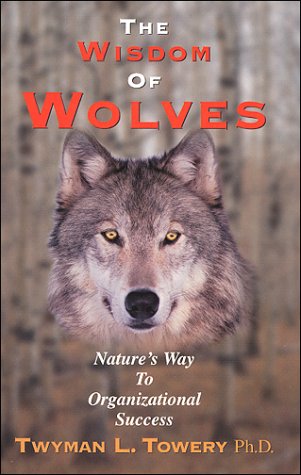
[G122.Ebook] Ebook Free The Wisdom of Wolves : Nature's Way to Organizational Success(revised), by Twyman L Towery

Ebook Free The Wisdom of Wolves : Nature's Way to Organizational Success(revised), by Twyman L Towery

Envision that you obtain such particular awesome encounter as well as knowledge by simply reading an e-book The Wisdom Of Wolves : Nature's Way To Organizational Success(revised), By Twyman L Towery. Just how can? It seems to be higher when a publication can be the best thing to discover. Books now will certainly appear in published as well as soft file collection. Among them is this e-book The Wisdom Of Wolves : Nature's Way To Organizational Success(revised), By Twyman L Towery It is so usual with the published publications. Nevertheless, many individuals in some cases have no room to bring the e-book for them; this is why they can't check out guide wherever they really want.

The Wisdom of Wolves : Nature's Way to Organizational Success(revised), by Twyman L Towery

The Wisdom of Wolves : Nature's Way to Organizational Success(revised), by Twyman L Towery


The Wisdom of Wolves : Nature's Way to Organizational Success(revised), by Twyman L Towery

Ebook Free The Wisdom of Wolves : Nature's Way to Organizational Success(revised), by Twyman L Towery

Just how if there is a website that allows you to look for referred publication The Wisdom Of Wolves : Nature's Way To Organizational Success(revised), By Twyman L Towery from throughout the world author? Immediately, the website will certainly be unbelievable finished. So many book collections can be found. All will certainly be so very easy without challenging point to move from site to site to obtain guide The Wisdom Of Wolves : Nature's Way To Organizational Success(revised), By Twyman L Towery really wanted. This is the website that will provide you those requirements. By following this website you can get great deals numbers of book The Wisdom Of Wolves : Nature's Way To Organizational Success(revised), By Twyman L Towery collections from versions types of writer as well as author popular in this world. The book such as The Wisdom Of Wolves : Nature's Way To Organizational Success(revised), By Twyman L Towery and also others can be gained by clicking good on web link download.

If you ally require such a referred The Wisdom Of Wolves : Nature's Way To Organizational Success(revised), By Twyman L Towery publication that will certainly provide you value, obtain the very best seller from us currently from numerous prominent publishers. If you wish to entertaining books, numerous stories, tale, jokes, and more fictions collections are likewise released, from best seller to the most recent released. You may not be confused to enjoy all book collections The Wisdom Of Wolves : Nature's Way To Organizational Success(revised), By Twyman L Towery that we will supply. It is not regarding the costs. It has to do with just what you require currently. This The Wisdom Of Wolves : Nature's Way To Organizational Success(revised), By Twyman L Towery, as one of the best vendors right here will certainly be one of the right options to read.

Finding the best The Wisdom Of Wolves : Nature's Way To Organizational Success(revised), By Twyman L Towery book as the ideal necessity is kind of lucks to have. To begin your day or to finish your day at night, this The Wisdom Of Wolves : Nature's Way To Organizational Success(revised), By Twyman L Towery will certainly be proper enough. You can simply hunt for the tile here as well as you will certainly get the book The Wisdom Of Wolves : Nature's Way To Organizational Success(revised), By Twyman L Towery referred. It will certainly not bother you to cut your important time to go with buying publication in store. This way, you will certainly also invest cash to spend for transportation and other time spent.

By downloading the on-line The Wisdom Of Wolves : Nature's Way To Organizational Success(revised), By Twyman L Towery publication right here, you will obtain some advantages not to opt for the book establishment. Just link to the net as well as start to download the web page link we share. Now, your The Wisdom Of Wolves : Nature's Way To Organizational Success(revised), By Twyman L Towery prepares to take pleasure in reading. This is your time as well as your tranquility to get all that you desire from this book The Wisdom Of Wolves : Nature's Way To Organizational Success(revised), By Twyman L Towery

The Wisdom of Wolves : Nature's Way to Organizational Success(revised), by Twyman L Towery

In this book, the first of a series, Dr. Towery responds to the resurgence of respect for the wisdom of the natural world with a guide to assist people today in meeting one of their greatest challenges: to find a balance between work, family and personal living. With the modern-day emphasis on leadership and the growth of family values, it is not always easy to remember that the strength of the wolf is the pack, and the strength of the pack is the wolf. This book will remind even the most corporate-minded that individual growth and potential lead to the strength of the organization, and that the strength of the organization leads to the strength of the individual. You will be inspired and motivated by well-researched stories depicting the fascinating organizational life of the majestic wolf pack...all woven together in a unique combination of poignant quotes, personal anecdotes, organizational examples and provocative questions. Lessons from nature s way illuminate timeless principles in each of the following chapters: Teamwork, Patience, Unity through uniqueness, Curiosity, Attitude, Failure, Communication, Perseverance, Strategy, Play, Death and survival, Loyalty and Change. This book reveals fundamental truths through unique stories that are not only fun to read but also serve as powerful metaphors for the human spirit through wolf tales and metaphors. The strength of the wolf pack, like any working group, lies in each member's ability to play a special role in harmony with the rest of the organization. The Wisdom of Wolves: Nature's Way to Organizational Success explains some of the crucial elements of any successful business or organization, such as teamwork, communication, perseverance and attitude.

  • Sales Rank: #1170382 in Books
  • Brand: Brand: Walnut Grove
  • Published on: 2000-02-01
  • Original language: English
  • Number of items: 1
  • Dimensions: .65" h x 5.82" w x 9.00" l, .55 pounds
  • Binding: Hardcover
  • 159 pages
Features
  • Used Book in Good Condition

From Publishers Weekly
This brief, easily digested book uses the ways of wild wolf packs as a metaphor for achieving business, family and personal success. Towery, a business and organizational consultant, clearly conveys the sense of life in a wolf pack, its organizational structure and strategies for survival. With intermittent quotes, anecdotes and simple exercises for relating the wolf pack to business organizations and families, the author explores such values and virtues as patience, curiosity, loyalty, communication, perseverance and learning from failures. Towery notes that "while human social order seems to be falling apart... the organization of the wolf pack remains the model of playfulness, teamwork, efficiency, and sharing." While their numbers have dwindled considerably (thanks to humans), wolves have maintained a consistent and effective culture, even while adapting to environmental changes. Practicing a kind of "natural population control" and living always "in balance with nature," wolves, Towery asserts, have values that "are never compromised." Wolves remain devoted to the group and affectionate, and place the education and care of their young above all else. There is much to learn from these creatures, Towery asserts, illustrating simply but powerfully how people can incorporate wolves' successful strategies into human organizations.
Copyright 1998 Reed Business Information, Inc.

Review
I was looking for a way to brand and bring my new team together. As we are not located in one location it was important for us to recognize the strength of the group. Each week I would start my weekly update to my team with a chapter from your book. It has given us a foundation as a unit that demonstrates the "Power of One." When we started in January our team was #42 out of 46 teams. I am happy to report my team finished #8 out of 46 for the month of August. I appreciate you personally signing each team member's copy. --Victor E. Perkins

The Wisdom of Wolves isn t a good book, It s a great book! It s not just entertaining, it s essential. --Michael P. Scott

This book will be as relevant 20 years from now as it is today, and it is right on the mark for today s fast changing world. --R. Clayton McWhorter

About the Author
Twyman Towery, Ph.D., FACHE, is a speaker, author, and management consultant. He is a respected organizational management authority both in the United States and internationally. Twyman holds a B.S. degree in pscyhology/business, a Master's Degree in Medical and Hospital Administration, and a Doctorate in Organizational Psychology. He is a Life Fellow of the American College of Healthcare Executives and a trustee of various organizations.

Most helpful customer reviews

0 of 0 people found the following review helpful.
Interesting and also a disappointment
By Edward T. Papson
Reading about the behavior of Wolves was interesting.
The authors application to business is deeply flawed.

Business is NOT the wild where the strongest survive.
It is a tangle of laws, regulations and full protection of those in "select groups".
It is far from the free Darwinian interaction of Wolves.
Simply put, i feel the author is trying like so many before to convince humans that there is some type of behavioral sensibility in the "Wild" that can be adopted and thus benefit humanity. It cannot. Society does not merely structure itself based on capability but also protects those that choose not to be a part of it, choose not to contribute to it ad most importantly try to destroy it. The society of Wolves would handle these types quickly with finality. There is NO way to apply the Wisdom of these wild & noble creatures to a society that kills the unborn, abuses the elderly and excuses criminals.

0 of 0 people found the following review helpful.
Great Gift
By Paufline L. Moreno
This I bought as a gift for my son who is infactuated by the wolf. We can learn so much from studying animals, learning their behaviours, and understanding our own behaviours through their way of life. After all, we are animals too!

0 of 0 people found the following review helpful.
An interesting read
By Crystal Longlade
I read the book in an evening and it was very enjoyable. I am a believer in the concepts presented and agree that all businesses could benefit from learning such a simple and effective form of communication.

See all 12 customer reviews...

The Wisdom of Wolves : Nature's Way to Organizational Success(revised), by Twyman L Towery PDF
The Wisdom of Wolves : Nature's Way to Organizational Success(revised), by Twyman L Towery EPub
The Wisdom of Wolves : Nature's Way to Organizational Success(revised), by Twyman L Towery Doc
The Wisdom of Wolves : Nature's Way to Organizational Success(revised), by Twyman L Towery iBooks
The Wisdom of Wolves : Nature's Way to Organizational Success(revised), by Twyman L Towery rtf
The Wisdom of Wolves : Nature's Way to Organizational Success(revised), by Twyman L Towery Mobipocket
The Wisdom of Wolves : Nature's Way to Organizational Success(revised), by Twyman L Towery Kindle

The Wisdom of Wolves : Nature's Way to Organizational Success(revised), by Twyman L Towery PDF

The Wisdom of Wolves : Nature's Way to Organizational Success(revised), by Twyman L Towery PDF

The Wisdom of Wolves : Nature's Way to Organizational Success(revised), by Twyman L Towery PDF

Kamis, 20 November 2014

[M591.Ebook] Free Ebook The New Ambidextrous Universe: Symmetry and Asymmetry from Mirror Reflections to Superstrings: Third Revised Edition, by Martin Gardner

Free Ebook The New Ambidextrous Universe: Symmetry and Asymmetry from Mirror Reflections to Superstrings: Third Revised Edition, by Martin Gardner

The book The New Ambidextrous Universe: Symmetry And Asymmetry From Mirror Reflections To Superstrings: Third Revised Edition, By Martin Gardner will certainly still give you favorable value if you do it well. Completing guide The New Ambidextrous Universe: Symmetry And Asymmetry From Mirror Reflections To Superstrings: Third Revised Edition, By Martin Gardner to read will not become the only objective. The objective is by obtaining the positive worth from the book up until the end of guide. This is why; you have to learn more while reading this The New Ambidextrous Universe: Symmetry And Asymmetry From Mirror Reflections To Superstrings: Third Revised Edition, By Martin Gardner This is not only how quickly you check out a book as well as not only has the amount of you completed guides; it is about just what you have obtained from guides.

The New Ambidextrous Universe: Symmetry and Asymmetry from Mirror Reflections to Superstrings: Third Revised Edition, by Martin Gardner

The New Ambidextrous Universe: Symmetry and Asymmetry from Mirror Reflections to Superstrings: Third Revised Edition, by Martin Gardner


The New Ambidextrous Universe: Symmetry and Asymmetry from Mirror Reflections to Superstrings: Third Revised Edition, by Martin Gardner

Free Ebook The New Ambidextrous Universe: Symmetry and Asymmetry from Mirror Reflections to Superstrings: Third Revised Edition, by Martin Gardner

Reading a book The New Ambidextrous Universe: Symmetry And Asymmetry From Mirror Reflections To Superstrings: Third Revised Edition, By Martin Gardner is kind of easy activity to do each time you really want. Also reviewing every time you really want, this task will not disturb your various other activities; lots of people commonly read the books The New Ambidextrous Universe: Symmetry And Asymmetry From Mirror Reflections To Superstrings: Third Revised Edition, By Martin Gardner when they are having the extra time. What about you? Exactly what do you do when having the extra time? Do not you spend for ineffective things? This is why you should get the book The New Ambidextrous Universe: Symmetry And Asymmetry From Mirror Reflections To Superstrings: Third Revised Edition, By Martin Gardner and attempt to have reading routine. Reviewing this e-book The New Ambidextrous Universe: Symmetry And Asymmetry From Mirror Reflections To Superstrings: Third Revised Edition, By Martin Gardner will not make you useless. It will provide more advantages.

The reason of why you can get as well as get this The New Ambidextrous Universe: Symmetry And Asymmetry From Mirror Reflections To Superstrings: Third Revised Edition, By Martin Gardner sooner is that this is the book in soft data form. You can check out guides The New Ambidextrous Universe: Symmetry And Asymmetry From Mirror Reflections To Superstrings: Third Revised Edition, By Martin Gardner anywhere you want also you remain in the bus, workplace, home, as well as other locations. Yet, you may not should relocate or bring the book The New Ambidextrous Universe: Symmetry And Asymmetry From Mirror Reflections To Superstrings: Third Revised Edition, By Martin Gardner print wherever you go. So, you will not have heavier bag to carry. This is why your option making better concept of reading The New Ambidextrous Universe: Symmetry And Asymmetry From Mirror Reflections To Superstrings: Third Revised Edition, By Martin Gardner is truly valuable from this instance.

Understanding the means ways to get this book The New Ambidextrous Universe: Symmetry And Asymmetry From Mirror Reflections To Superstrings: Third Revised Edition, By Martin Gardner is also useful. You have remained in ideal site to start getting this information. Get the The New Ambidextrous Universe: Symmetry And Asymmetry From Mirror Reflections To Superstrings: Third Revised Edition, By Martin Gardner link that we offer right here and also check out the link. You could get guide The New Ambidextrous Universe: Symmetry And Asymmetry From Mirror Reflections To Superstrings: Third Revised Edition, By Martin Gardner or get it as quickly as possible. You can swiftly download this The New Ambidextrous Universe: Symmetry And Asymmetry From Mirror Reflections To Superstrings: Third Revised Edition, By Martin Gardner after getting bargain. So, when you need guide swiftly, you can directly obtain it. It's so very easy therefore fats, right? You have to favor to in this manner.

Just link your tool computer system or device to the net attaching. Get the modern-day technology to make your downloading The New Ambidextrous Universe: Symmetry And Asymmetry From Mirror Reflections To Superstrings: Third Revised Edition, By Martin Gardner finished. Also you do not wish to review, you could directly shut the book soft documents and open The New Ambidextrous Universe: Symmetry And Asymmetry From Mirror Reflections To Superstrings: Third Revised Edition, By Martin Gardner it later on. You can likewise effortlessly obtain guide anywhere, due to the fact that The New Ambidextrous Universe: Symmetry And Asymmetry From Mirror Reflections To Superstrings: Third Revised Edition, By Martin Gardner it is in your gadget. Or when remaining in the workplace, this The New Ambidextrous Universe: Symmetry And Asymmetry From Mirror Reflections To Superstrings: Third Revised Edition, By Martin Gardner is additionally advised to check out in your computer gadget.

The New Ambidextrous Universe: Symmetry and Asymmetry from Mirror Reflections to Superstrings: Third Revised Edition, by Martin Gardner

"What makes Gardner so appealing is his ease in exploring deep ideas . . . and making them accessible to the interested but nontechnical reader. This is a special talent and no one has ever displayed it quite as well as he does." — Los Angeles Times
"Absorbing; enlightening; lucid; witty; inventive. An exemplar of science writing at its very best." — American Mathematical Monthly
A substantial revision of Martin Gardner's earlier well-known work on mirror symmetry and asymmetry, The New Ambidextrous Universe takes readers on an extraordinary journey. With Gardner’s guidance, they explore the two fundamental scientific discoveries of the past century: the asymmetric DNA helix and the overthrow of parity (left-right symmetry) in particle physics. Along the way, students will find absorbing and thought-provoking treatments of some of the deepest mysteries in modern physics.
Author of more than 60 books, Martin Gardner has influenced and inspired generations of scientists, scholars, and other readers, especially those with an interest in mathematics. He originated Scientific American's popular Mathematical Games column, which he wrote from 1956 until his retirement from the magazine three decades later. This republication of his revised edition of an earlier work features a new appendix of notes and corrections.

  • Sales Rank: #832782 in Books
  • Published on: 2005-07-26
  • Released on: 2005-07-26
  • Original language: English
  • Number of items: 1
  • Dimensions: 8.62" h x .85" w x 5.51" l, .97 pounds
  • Binding: Paperback
  • 416 pages

About the Author
Martin Gardner was a renowned author who published over 70 books on subjects from science and math to poetry and religion. He also had a lifelong passion for magic tricks and puzzles. Well known for his mathematical games column in Scientific American and his "Trick of the Month" in Physics Teacher magazine, Gardner attracted a loyal following with his intelligence, wit, and imagination.

Martin Gardner: A Remembrance
The worldwide mathematical community was saddened by the death of Martin Gardner on May 22, 2010. Martin was 95 years old when he died, and had written 70 or 80 books during his long lifetime as an author. Martin's first Dover books were published in 1956 and 1957: Mathematics, Magic and Mystery, one of the first popular books on the intellectual excitement of mathematics to reach a wide audience, and Fads and Fallacies in the Name of Science, certainly one of the first popular books to cast a devastatingly skeptical eye on the claims of pseudoscience and the many guises in which the modern world has given rise to it. Both of these pioneering books are still in print with Dover today along with more than a dozen other titles of Martin's books. They run the gamut from his elementary Codes, Ciphers and Secret Writing, which has been enjoyed by generations of younger readers since the 1980s, to the more demanding The New Ambidextrous Universe: Symmetry and Asymmetry from Mirror Reflections to Superstrings, which Dover published in its final revised form in 2005.

To those of us who have been associated with Dover for a long time, however, Martin was more than an author, albeit a remarkably popular and successful one. As a member of the small group of long-time advisors and consultants, which included NYU's Morris Kline in mathematics, Harvard's I. Bernard Cohen in the history of science, and MIT's J. P. Den Hartog in engineering, Martin's advice and editorial suggestions in the formative 1950s helped to define the Dover publishing program and give it the point of view which — despite many changes, new directions, and the consequences of evolution — continues to be operative today.

In the Author's Own Words:
"Politicians, real-estate agents, used-car salesmen, and advertising copy-writers are expected to stretch facts in self-serving directions, but scientists who falsify their results are regarded by their peers as committing an inexcusable crime. Yet the sad fact is that the history of science swarms with cases of outright fakery and instances of scientists who unconsciously distorted their work by seeing it through lenses of passionately held beliefs."

"A surprising proportion of mathematicians are accomplished musicians. Is it because music and mathematics share patterns that are beautiful?" — Martin Gardner

Most helpful customer reviews

19 of 20 people found the following review helpful.
Frames superstrings and twistors
By Worldreels
Every decade Gardner updates this book. The five new chapters in the 1990 edition, including material on twistors and superstrings, are well worth the price. What Gardner does best is frame the new theories within a historical perspective. For example, he says it is impossible not to compare string theory with Lord Kelvin's (W. Thompson) 1958 theory of vortex strings. Vortex string theory was fashionable for at least fifty years. Gardner shows the vortex string theory and the superstring theory to be kissing cousins: Lord Kelvin used perfect fluid to refer to the superstring quantum vacuum -- both referring to the same sub-space area. String theory speaks of vibrating frequencies of energy while vortex rings were also vibrating frequencies that gave the atoms different properties. Instead of quantum foam with jittering virtual particles, vortex theory had vortex sponges with billions of vortex motions whirling in all directions.
Gardner's account of Roger Penrose's twistor theory is short and excellent. Physicists have gotten tangled up trying to speak of deeper down events which are hidden from view due to their sub-Planck length size (10 to the minus 33rd power of a centimeter). Here it is pointed out that "on a sufficiently small scale the concept of a space-time point evaporates in the complex space of twistor theory." Twistor theory, like superstring theory, was merely trying to formulate how the submicroscopic particles come into being. Both theories consist of math and lack any experimental verification. To repeat, the author discusses these obtuse theories in a way that frames their overall direction of thought. Gardner appears to agree with Howard George who calls superstring theory a "recreational mathematical theology." The bottom line -- both twistor and string theory are philosophy -- not physics.

10 of 10 people found the following review helpful.
Wonderful, but somewhat out-of-date (only at the end).
By Dale Wood
I think that THE NEW AMBIDEXTROUS UNIVERSE (1990) is a wonderful book on symmetry and asymmetry in the worlds of everyday life, chemistry, physics, and unification theories. Everything in this book is noteworthy, and also up-to-date except for the last few chapters.
It is a very good updating of the previous (1978) edition, which concluded with many open questions in elementary particle physics that were resolved (and new questions raised) in 1978 - 1989.
It is high time for this book to be updated if Mr. Gardner can manage it (he is rather elderly; born in 1914), and a publisher will take a new edition. Books like this are gueling to revise and update.

8 of 8 people found the following review helpful.
Review from a non-scientific perspective
By Sarah
I'm not going to say that I understand all of this. Most of it is way over my head, but after reading it, I can say that I understand more now than I did before. I'm planning on attacking it again in a couple years. Overall, however, Gardner does a good job of bring complicated scientific theory down to a plain English level by using diagrams and analogies.

See all 12 customer reviews...

The New Ambidextrous Universe: Symmetry and Asymmetry from Mirror Reflections to Superstrings: Third Revised Edition, by Martin Gardner PDF
The New Ambidextrous Universe: Symmetry and Asymmetry from Mirror Reflections to Superstrings: Third Revised Edition, by Martin Gardner EPub
The New Ambidextrous Universe: Symmetry and Asymmetry from Mirror Reflections to Superstrings: Third Revised Edition, by Martin Gardner Doc
The New Ambidextrous Universe: Symmetry and Asymmetry from Mirror Reflections to Superstrings: Third Revised Edition, by Martin Gardner iBooks
The New Ambidextrous Universe: Symmetry and Asymmetry from Mirror Reflections to Superstrings: Third Revised Edition, by Martin Gardner rtf
The New Ambidextrous Universe: Symmetry and Asymmetry from Mirror Reflections to Superstrings: Third Revised Edition, by Martin Gardner Mobipocket
The New Ambidextrous Universe: Symmetry and Asymmetry from Mirror Reflections to Superstrings: Third Revised Edition, by Martin Gardner Kindle

The New Ambidextrous Universe: Symmetry and Asymmetry from Mirror Reflections to Superstrings: Third Revised Edition, by Martin Gardner PDF

The New Ambidextrous Universe: Symmetry and Asymmetry from Mirror Reflections to Superstrings: Third Revised Edition, by Martin Gardner PDF

The New Ambidextrous Universe: Symmetry and Asymmetry from Mirror Reflections to Superstrings: Third Revised Edition, by Martin Gardner PDF